Domain vs Hosting - What Each Does, Why You Need Both and Where to Buy Them (2026)
A domain is your website's address and hosting is where it lives. Here's how they work together, what each costs and whether you should buy them from the same company.
On This Page
The Simple Difference
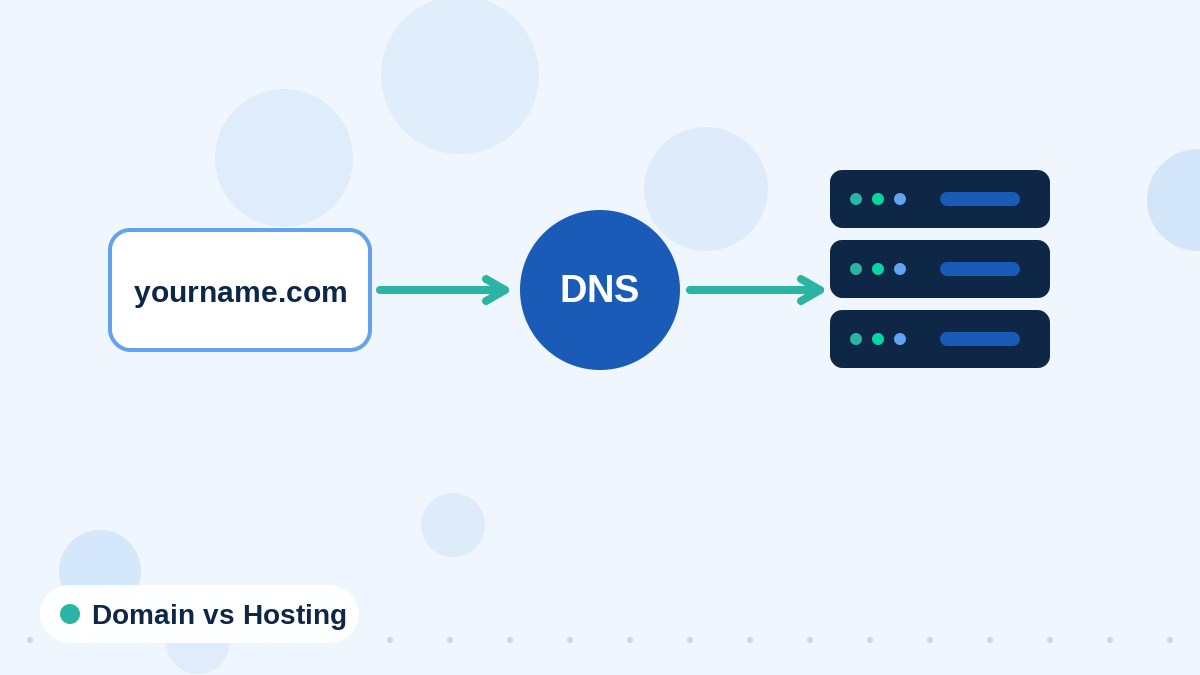
If your website were a shop:
- The domain is the street address on the sign. It tells people where to find you.
- The hosting is the building itself, where the shelves, stock and staff actually are.
An address with no building leads nowhere. A building with no address is hard to find. Together, they let customers walk in.
| Domain Name | Web Hosting | |
|---|---|---|
| What it is | Your website's address | Storage and servers for your website |
| Example | yourbusiness.com | A shared, VPS or cloud hosting plan |
| Bought from | A domain registrar | A hosting company |
| Billing | Usually yearly | Monthly or for a term of 1–3 years |
| Typical cost | Around $10–$25 a year for a .com | A few dollars a month and up |
| Also used for | Email addresses at your domain | Files, databases, often email too |
What a Domain Name Does
Computers find each other using numeric IP addresses, which are hard to remember. A domain name is a human-friendly label that points to those numbers.
When you register a domain, you're leasing the right to use that name for a period, usually one year at a time, from a domain registrar. As long as you renew, it's yours to use. Your domain also powers email addresses like [email protected].
Domains have two main parts: the name you choose and the extension, such as .com, .org or .co.uk. Our how to choose a domain name guide covers picking a good one.
What Web Hosting Does
Hosting is the always-on computer that stores your site: its pages, images, code and database. When someone visits, the hosting server sends those files to their browser.
Hosting plans also commonly include a control panel, free SSL for HTTPS, backups, email accounts and tools like one-click WordPress installs. Our what is web hosting guide explains it in more depth.
How Domains and Hosting Connect
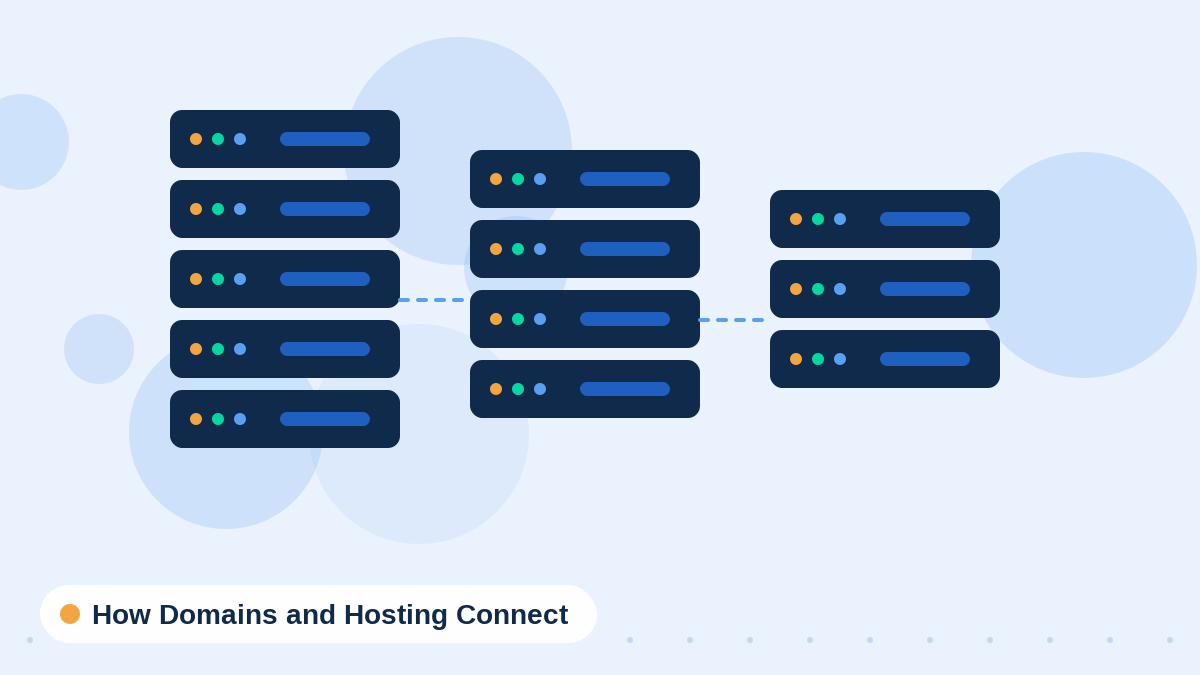
The link between your domain and your hosting is the Domain Name System, or DNS. Here's how it fits together:
Your domain's nameservers tell the internet which DNS service holds your records.
Your DNS records say which server hosts your website and where email goes.
A visitor's browser looks up those records and connects to your hosting server.
Your hosting server sends back your website.
If you buy your domain and hosting from the same company, this is set up automatically. If you buy them separately, you'll point the domain to your host by changing its nameservers or DNS records. Our nameservers guide explains how.
Buying Them Together vs Separately
Buying together from one company is the simplest route. Everything is in one account, there's no DNS to configure, and many hosts include a free domain for the first year. Bluehost, for example, includes a free domain for the first year with its Web, WordPress and WooCommerce plans on 12-month or 36-month terms.
Buying separately gives you flexibility. Some people prefer keeping domains at a specialist registrar so they can switch hosts without touching the domain. It means a little more setup, but it's straightforward.
| Factor | Together | Separately |
|---|---|---|
| Setup | Automatic | Change nameservers or DNS |
| Billing | One account | Two accounts |
| Free domain offer | Often included for year one | Not usually |
| Switching hosts later | Domain can stay or move | Domain stays put |
| Best for | Beginners, simplicity | Owners of many domains, frequent movers |
Either approach works. For a first website, we'd buy together for simplicity and take advantage of the free first-year domain.
Common Questions About Ownership
Do I own my domain if I buy it from my host? Yes. The domain is registered in your name, and you can transfer it to another registrar later. New registrations typically can't be transferred for the first 60 days.
What happens to my domain if I cancel hosting? It stays registered to you until its expiry date, as long as it's renewed. Hosting and domains renew separately. Bluehost, for instance, deducts a domain fee from refunds if your plan included a free domain, but you keep the domain.
Can I move my website without changing my domain? Yes. Your domain stays the same; you just point it to the new host. Visitors won't notice the change.
Where Email Fits In

Email sits between the two. Your email address uses your domain, but the mailboxes themselves live on a mail service, which can be your hosting, a dedicated email service or a suite like Google Workspace.
DNS ties it together. Your domain's MX records tell the internet which service receives mail for your domain. If you buy domain and hosting together and use the host's email, those records are set automatically. If you use a separate email service, you add its records to your domain's DNS.
This matters when you change hosts. If your email lives on your hosting, it moves with the hosting. If it lives on a separate service, it keeps working wherever your website goes. Our Bluehost email hosting guide compares the options.
Common Mistakes to Avoid
- Letting the domain expire. An expired domain takes your website and email offline, and can be registered by someone else.
- Registering the domain in someone else's name. If a designer or agency registers it, make sure you're listed as the owner.
- Forgetting where the domain is registered. Keep a note of the registrar and login, especially if domain and hosting are with different companies.
- Changing nameservers without copying records. If email or other services use your current DNS, recreate those records before switching.
- Assuming hosting renewal covers the domain. They renew separately.
Costs Over Time
Domains and hosting both renew, on separate schedules. A .com domain that's free in year one renews at the registrar's regular price, which was $23.99 a year at Bluehost in November 2026. Hosting renews at the end of its term, usually at a higher rate than the introductory price.
Keep a note of both renewal dates, and decide well ahead whether to keep each one. Our hosting cost guide shows realistic yearly budgets, and our free domain guide covers domain renewal prices.
Getting Started
The quickest way to get both is to choose a hosting plan that includes a free domain, then pick your domain during checkout. Your site and domain are connected automatically, and you can install WordPress straight away.
If you already own a domain elsewhere, you can still buy hosting and point the domain to it, or transfer the domain in. Our connect a domain guide walks through both.
Domain vs Hosting FAQ
Do I need both a domain and hosting?
Yes, for a website at your own address. The domain is the address; hosting is where the site lives.
Can I buy a domain without hosting?
Yes. You can register a domain and connect hosting later, or use it only for email.
Can I have hosting without a domain?
Yes, but visitors would need a temporary address. Most people add a domain before launching.
Is a domain a one-time purchase?
No. Domains are registered for a period, usually a year, and must be renewed.
Should I buy my domain from my web host?
For simplicity, yes, especially if a free first-year domain is included. Separate registrars suit people managing many domains.
Does changing hosts mean changing my domain?
No. You keep your domain and point it to the new host.